Suzuki Eiger 400: Suzuki has quietly tweaked its Eiger 400 for 2026, and honestly, it feels less like a flashy “new model” moment and more like a well-earned refinement of a workhorse that already knew its job. This thing still has that no-nonsense, go-anywhere attitude built for rough trails, muddy farms, and whatever punishment gets thrown at it, but now the engine runs a bit smoother, the ride feels less harsh on long days, and the overall usability is just more thoughtful.
Like someone finally went through and fixed the little annoyances riders used to just live with. It’s not trying to be a lifestyle toy or a weekend showpiece; it’s still the dependable, slightly gritty utility machine that shows up, does the job, and doesn’t complain, just with a bit more polish around the edges.
Rugged All-Terrain Design Philosophy
The 2026 Suzuki Eiger 400 doesn’t really try to impress with drama—it just shows up looking ready for work, and that’s kind of the point. The stance is wide, the ground clearance sits high enough to shrug off rough patches without thinking twice, and the reinforced chassis gives off that “don’t test me” energy in the best possible way.
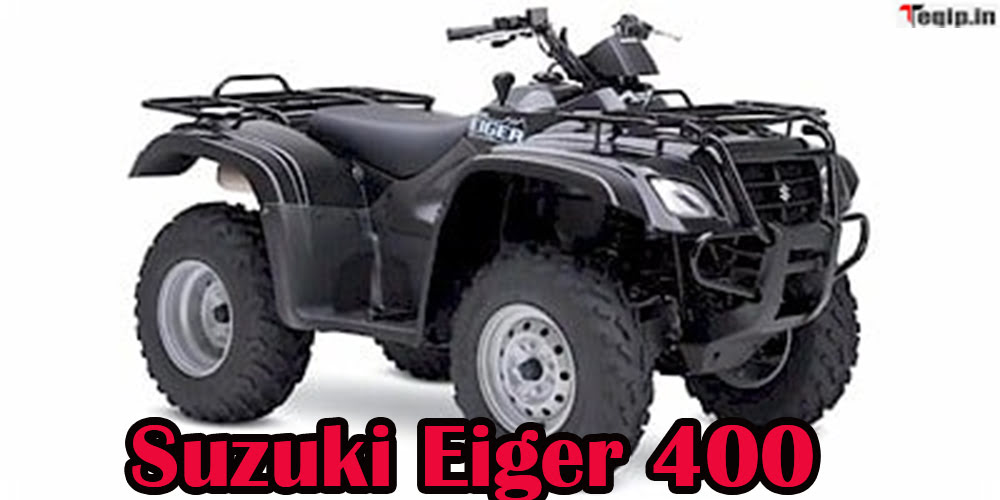
Even the updated body panels feel less like styling changes and more like practical armor, with a bit of extra polish thrown in so it doesn’t look purely utilitarian. It’s tough, a little rugged around the edges, and honestly feels like something built by people who actually expect it to get abused in the real world rather than just admired in a showroom.
Suzuki Eiger 400 2026 Specifications
| Feature | Specification | Category | Details |
| Engine | Single-Cylinder Petrol | Performance | Refined & Torque-Focused Output |
| Transmission | Automatic / Manual Option | Utility | Smooth All-Terrain Operation |
| Suspension | Long-Travel Setup | Handling | Stable Off-Road Performance |
| Body Style | All-Terrain Vehicle | Design | Rugged & Utility-Oriented Build |
Refined Engine for Reliable Performance
The 2026 Eiger 400 doesn’t really show up with fireworks—it just quietly gets better at its job, and weirdly, that’s the charm. The engine feels tuned for people who actually ride rough ground, not just talk about it; low-end torque comes in steady and firm, like it already knows the trail’s going to get messy before you do. No jumpy, overexcited surge trying to impress anyone—just clean, readable throttle that keeps things calm when the terrain turns into chaos.
There’s something almost nerdily satisfying about how unbothered it feels, like it’s doing heavy lifting without asking for applause. Long rides hit different too—less fatigue, fewer “why did I choose this line?” moments, more just rolling through it while the machine quietly does the grunt work. Not flashy, not dramatic, just dependable in a way that almost feels a bit smug about it.
Updated Features for Utility & Control
The 2026 Suzuki Eiger 400 shows up with a few quiet, sensible tweaks—nothing flashy, nothing trying to steal attention in a showroom, just those subtle improvements you only really notice once you’re actually out on a trail and things get messy. It doubles down on practicality in a very “you’ll thank it later” kind of way, especially when the ground keeps changing its mind between stable and sketchy.
No reinvention here, just smoothing out the rough edges so it feels a bit more settled and easy to live with across different surfaces. And that’s really the whole vibe—no big drama, no marketing theatrics—just a steadier, more composed machine that feels a touch more sure of itself when the wheels hit unpredictable ground.
- Improved suspension setup for rough surfaces
- Enhanced braking system for better control
- Updated instrumentation for clearer ride information
Ride Stability & Terrain Handling
The 2026 Suzuki Eiger 400 moves through mud, loose gravel, and those uneven, slightly annoying trails with this calm, almost unbothered rhythm—like it’s been there a hundred times and can’t be bothered to act surprised anymore. It doesn’t bounce around or make a fuss when things get rough; the suspension just soaks up hits in a quietly competent way, almost like it’s brushing off the terrain without turning it into a whole dramatic moment.
Steering stays light and predictable at crawling speeds, nothing sharp or nervous, which honestly helps when the trail starts getting messy and attention narrows down to just staying upright and moving forward. There’s a simple, grounded honesty in how it handles everything—no flashy “look what I can do” energy, just that steady, slightly stubborn confidence that says it’ll get through it even when the ground looks like it’s arguing otherwise.
Target Users & Market Position
The 2026 Suzuki Eiger 400 feels like it never bothered chasing hype in the first place—it just locked into its crowd and stayed there, serving utility riders, trail junkies, and the kind of people who treat machines like tools, not showroom pets. There’s nothing flashy or “look at me” about it; it has that blunt, almost refreshing attitude of “just get on and go,” which hits differently when everything else is trying too hard these days.
The build comes off tough and a bit old-school in a good, slightly stubborn way—like it’s fine getting scratched up, hosed off, and thrown back into work without a second thought. It carries this quiet, practical honesty, almost refusing to follow trends out of principle, and that no-drama character is exactly why it still lands so well with riders who care more about distance covered than attention earned.
Final Verdict
The 2026 Suzuki Eiger 400 doesn’t try to be the star of the trail, and honestly, that’s kind of its charm—it just shows up like that one dependable friend who’s slightly rough around the edges but never flakes. The engine feels a touch smoother this time, not in a “wow, new machine” way, more like “huh, that weird vibration I ignored for years is just… less annoying now,” especially when the terrain gets messy and everything else starts shouting for attention.